
Ice Dams Building Along Your Eaves? How to Keep Winter Meltwater Out From Under Your Shingles
August 30, 2026
The Streaks Are a Signal, Not a Verdict
Quick Answer: Ice dams form when heat escaping into your attic melts the snow on the upper roof while your eaves stay below freezing, so that meltwater refreezes right at the edge and backs up under your shingles. The fix isn't more ice melt or a bigger roof rake — it's stopping the heat loss that's warming your roof deck in the first place, through better attic insulation, air sealing, and balanced ventilation, backed up by a properly installed water barrier at the eaves. In Central Kentucky's freeze-thaw winters, a roof that stays a uniform cold from ridge to eave rarely grows an ice dam worth worrying about.
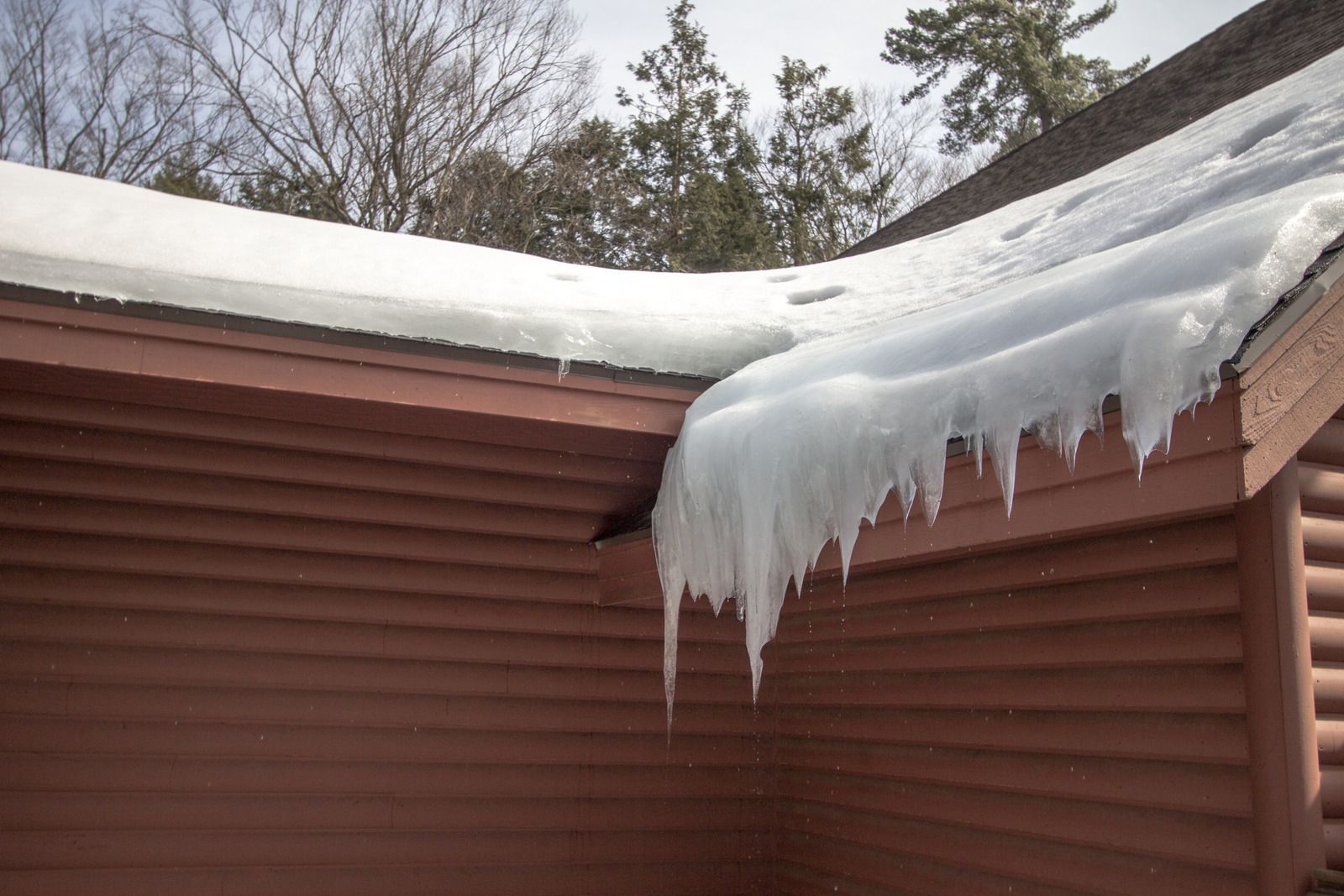
You come in from clearing the driveway and notice it: a thick ridge of ice hanging off the edge of the roof, right above the gutter, with a row of icicles growing off the fascia board like teeth. Inside, there's a faint brown ring spreading across the ceiling in the corner bedroom, and nobody in the house can figure out where the water is coming from since it hasn't rained in a week. That's an ice dam, and if you've lived in Cynthiana or anywhere in Central or Northern Kentucky for more than a winter or two, you've probably seen one form on your own roof or a neighbor's.
Ice dams aren't caused by heavy snow alone. They're caused by heat in the wrong place. Once you know where that heat is coming from, the fix stops being a mystery.
What's Actually Happening on Your Roof When an Ice Dam Forms
An ice dam needs three things at the same time: snow sitting on the roof, air temperatures below freezing, and a roof deck that's warmer than the air around it. That third piece is the one most homeowners never think about, and it's the one that actually matters.
Warm air rises. In an attic with gaps around light fixtures, plumbing stacks, the attic hatch, or thin insulation over the top plates of exterior walls, that heat finds its way up through the ceiling and into the attic space. Once it's there, it warms the underside of the roof deck from below. The snow sitting directly over the heated section of attic starts to melt, even while the outside air stays well below freezing.
That meltwater runs down the roof slope under the snowpack until it reaches the eaves — the section of roof that overhangs the exterior walls. The eaves sit outside the heated envelope of the house, so they stay cold no matter what's happening in the attic above the living space. The water that was liquid a few feet up the slope hits that cold zone and freezes solid. Snowmelt keeps arriving from above, meets ice that's already there, and refreezes on contact. Layer by layer, that ridge of ice grows thicker and pushes further up the roof, which is where the "dam" part of the name comes from.
Once the ice ridge is tall enough, it holds back a pool of water on the warm side of the roof. Shingles are built to shed water running downhill. They were never built to hold back standing water. That trapped pool finds every seam, nail hole, and shingle lap it can, and works its way under the roofing material and into your attic, ceiling, and walls.
Not pretty, and not something you want sitting up there for a week.
Why Kentucky's Freeze-Thaw Winters Make This Worse
Central and Northern Kentucky don't get the deep, steady snowpack of a New England winter, but that's part of what makes our version of this problem tricky. A Cynthiana winter swings — a cold snap in the 20s, a few inches of snow, then a thaw back into the 40s, then another hard freeze a few days later. Each swing is a fresh opportunity for meltwater to run, hit a cold edge, and refreeze.
Freezing rain and ice storms add another layer to it. When a coating of sleet or freezing rain bonds directly to a roof that already has snow cover, it seals the surface and gives meltwater fewer places to drain off before it reaches the eaves. And because our winters aren't cold enough, day after day, to force builders to plan for it the way a northern climate does, a lot of Kentucky homes have attic insulation and ventilation sized for average conditions rather than for repeated freeze-thaw swings. That gap between what a roof needs and what it actually has is where ice dams take hold.
The Signs You're Dealing With an Ice Dam
Most homeowners catch an ice dam by sight before they catch it by damage, which is the best time to deal with it.
Icicles along the gutter line
A few small icicles after a cold snap are normal. A thick, continuous curtain of ice hanging off the whole eave, especially paired with a visible ridge of ice sitting on the roof itself, is a sign meltwater is backing up rather than draining.
A defined ice ridge above the gutter
Look for a raised band of ice that sits noticeably higher than the rest of the snow on the roof, usually right at the transition from the warm part of the roof to the eave overhang.
Water stains on interior ceilings or walls, especially near exterior corners
This is the sign that shouldn't wait. If you see a stain forming during or right after a freeze-thaw cycle and there's been no rain, an ice dam backing water up under the shingles is the most likely explanation.
Sagging gutters or gutters pulling away from the fascia
The weight of trapped ice is heavier than most gutter systems are built to hold for long, and repeated ice loading can bend hangers or pull the whole run loose over a season or two.
Musty smell or peeling paint in an upstairs closet or spare room
Slow water intrusion from an ice dam doesn't always show up as an obvious stain first. Sometimes the first clue is a smell or a bit of bubbling paint in a room you don't use every day.
Tip: If you do need to knock down a manageable buildup of snow before it has a chance to melt and refreeze, use a roof rake with a long extension handle from the ground and pull snow straight down and off the roof — never sideways or upward, and never up onto the roof itself. Clearing the first three or four feet above the eave line reduces how much snow is available to melt into the danger zone, without you ever leaving solid ground.
Where the Water Actually Gets In
Asphalt shingles are lapped like fish scales, designed to shed water that's moving downhill under gravity. They were never meant to hold back a standing pool, which is exactly what forms on the uphill side of an ice dam. Once there's standing water sitting against a shingle edge or nail penetration for hours or days at a time, it doesn't take much of a gap for it to work its way sideways and upward under the shingle course above it.
This is where the layers underneath your shingles start to matter as much as the shingles themselves. A self-adhering water-resistant membrane installed along the eaves and in roof valleys during a roof's construction is built specifically to seal around nail penetrations and stop water that gets past the shingle layer from reaching the wood deck below. On an older roof, or one where that membrane wasn't extended far enough up the slope to cover the area where ice dams typically form, standing meltwater has a much easier path down into the sheathing, the attic insulation, and eventually the ceiling drywall.
Ventilation plays a role here too. A roof that's properly vented — intake at the soffits, exhaust higher up near the ridge — pulls in cold outside air along the underside of the deck and carries away the residual warmth that leaks up from the living space below. That constant flow of cold air keeps the entire roof deck closer to outdoor temperature, which shrinks the warm zone where melting happens in the first place. Blocked soffit vents, insulation stuffed into the eave space, or a ridge vent that isn't doing its job all work against you here, even if the insulation itself is otherwise adequate.
Warning: Never use an open flame, a blowtorch, or a heat gun to try to melt through an ice dam from the roof. It's a fast way to scorch shingles, damage the roofing material underneath, or start a fire in old, dry sheathing, and it does nothing to fix the heat-loss problem that caused the dam to form in the first place.
What You Can Do Before Winter Hits
The most effective ice dam prevention happens in the attic, months before the first hard freeze, not on the roof during a storm.
Check attic insulation depth and evenness
Thin spots, gaps around the attic hatch, or insulation that's been pushed aside near vents all create localized warm spots directly under the roof deck. An even, adequately deep layer across the whole attic floor — including out to the edges above the exterior walls — keeps the heat where it belongs.
Look for and seal air leaks between the living space and the attic
Recessed lighting, bathroom exhaust fans, plumbing stacks, and the attic access hatch are common paths for warm, moist household air to sneak upward. Sealing those gaps does more to stop ice dams than almost anything else, since it addresses the actual source of the heat rather than just the symptom.
Confirm soffit and ridge vents are clear and balanced
Insulation blocking the soffit intake, or a ridge vent that's painted over or clogged with debris, breaks the airflow loop that keeps the roof deck cold. Both intake and exhaust need to be open and roughly matched for the system to work the way it was designed to.
Clear gutters before the first freeze
Leaves and debris packed into a gutter trap meltwater right where it's most likely to refreeze, giving an ice dam an even easier place to start forming.
Have an eave inspection done if your roof is more than a decade or two old
Whether the eaves have adequate water-resistant membrane coverage for how ice dams actually behave on your roof's slope and layout is something worth a professional look, especially if you've dealt with staining or ice buildup in the same spot more than once.
Frequently Asked Questions
Can I prevent ice dams just by adding more roof insulation?
Not entirely. Insulation helps reduce heat loss, but air leaks and poor attic ventilation can still warm the roof deck. Effective prevention requires insulation, air sealing, and balanced ventilation working together.
Do ice dams only happen after heavy snow?
No. Even a few inches of snow can create ice dams when heat escapes through the attic. A properly insulated and ventilated roof may avoid ice dams despite heavier snowfall entirely.
Is it safe to remove ice dams myself once they've formed?
Removing accessible snow with a roof rake from the ground can be safe. Avoid climbing icy roofs, chipping solid ice, or using sharp tools because these methods can cause injuries or damage.
Will heat cables along the eaves fix the underlying problem?
Heat cables can help create drainage paths through ice, but they do not correct the underlying heat loss. Proper insulation, attic air sealing, and ventilation provide a more complete long-term solution.
How can I tell if water damage inside my home came from an ice dam versus a roof leak in general?
Timing provides an important clue. Water stains appearing during freeze-thaw cycles without rainfall often indicate ice dams. Leaks that worsen during regular rain may instead indicate flashing problems or damaged shingles.
Does the age of my roof affect how likely it is to develop ice dams?
Roof age alone does not cause ice dams. However, older roofs may have inadequate eave protection, settled insulation, blocked ventilation, or accumulated air leaks that make winter ice buildup more likely.
Keeping Your Roof Protected Through Kentucky Winters
Ice dams are easier to prevent when the roof, attic, and insulation work together to control heat and moisture. In Cynthiana, Kentucky, repeated freeze-thaw cycles make consistent attic temperatures especially important. With 20 years of experience, Maiden City Contracting understands how insulation gaps, air leaks, blocked ventilation, and vulnerable eaves can contribute to winter moisture problems. Addressing these conditions before temperatures drop helps reduce ice buildup while protecting shingles, roof decking, gutters, ceilings, and other materials from unnecessary water damage.
A dependable winter roof is not simply one that can carry snow; it is one designed to keep heat where it belongs and allow moisture to move away safely. Proper air sealing, even insulation, clear ventilation pathways, clean gutters, and adequate eave protection all contribute to that balance. When those elements perform correctly, the roof deck stays closer to the outdoor temperature, reducing the melting and refreezing cycle that creates ice dams and helping the
roofing system
handle changing winter conditions more effectively.